
You wake up one day and the center of your vision in one eye looks off. It is blurry, a little dim, and objects might seem smaller or distorted, as if you are looking through a faint bubble of water. Your side vision is fine, and the other eye is perfect, which makes the change even more puzzling. If this sounds familiar, you may be experiencing central serous retinopathy.
Here is the reassuring headline: for most people, central serous retinopathy is not sight-threatening and often clears up on its own within a few months. It tends to affect otherwise healthy adults, frequently those under stress, and the vision usually recovers well. The important parts are getting the right diagnosis so it is not confused with something more serious, and knowing when it needs treatment rather than just patience.
This guide explains what central serous retinopathy is, why it causes that blurry central spot, who tends to get it, the surprising role of stress and certain medications, how it is diagnosed, and the options when it does not clear on its own. If your central vision has turned hazy in one eye, read on, and then have it checked.
Key Takeaways
- Central serous retinopathy (CSR) happens when fluid builds up under the retina, usually at the macula, blurring central vision in one eye.
- Common symptoms include a blurry or dim central spot, distortion, and objects looking smaller or farther away.
- It most often affects healthy adults, especially men in their 30s to 50s, and is strongly linked to stress and to steroid medications.
- In most cases the fluid reabsorbs on its own within a few months and vision recovers.
- When it lingers or keeps coming back, treatments like laser or other therapies can help.
- A proper exam with retinal imaging is essential to confirm the diagnosis and rule out other causes of central vision loss.
In This Guide
- What central serous retinopathy is
- Why it blurs your central vision
- Symptoms to recognize
- Causes and the role of stress and steroids
- Who is at risk
- How it is diagnosed
- Treatment and the watch-and-wait approach
- Self-care and reducing recurrences
- When to see an eye doctor
- Frequently asked questions
What Central Serous Retinopathy Is
To picture this condition, start with the back of the eye. The retina is the thin, light-sensing layer lining the inside of the eye, and just beneath it sits a support layer with a system that normally keeps the retina dry and pumps away any stray fluid. The macula is the small central zone of the retina responsible for your sharpest, detailed vision.
In central serous retinopathy, a small leak allows fluid to seep up and collect under the retina, usually right at the macula. Picture a tiny blister of clear fluid lifting the central retina slightly off its base. Because that is exactly the spot you use for reading and seeing detail, even a small amount of fluid there smears and dims your central vision. The name captures it well: “central” for the macula, “serous” for the clear fluid, and “retinopathy” for the retina being affected.
Importantly, this is usually a problem of fluid and plumbing, not of abnormal blood vessels like in wet macular degeneration. That distinction matters, which is why a careful exam is needed to tell them apart.
Why It Blurs Your Central Vision
The retina works best when it lies flat and snug against its support layer, like wallpaper pressed smoothly to a wall. When fluid collects underneath, it lifts the central retina into a slight dome. Light focused by the eye no longer lands on a flat, properly positioned surface, so the image at the center goes soft and distorted.
This is why people describe such specific symptoms: a blurry or gray patch in the middle of their vision, straight lines that bend, or a sense that objects look smaller or set a little farther back than they should. Colors may look dimmer or slightly off in the affected eye. Your peripheral vision stays clear because the fluid is centered on the macula, not the edges.
Symptoms to Recognize
Central serous retinopathy usually comes on fairly suddenly in one eye, and the symptoms are distinctive once you know them.
- A blurry, dim, or gray spot in the center of your vision
- Straight lines appearing bent or wavy
- Objects looking smaller than normal in the affected eye
- A sense that your central vision is dull or washed out, with less vivid color
- Needing to blink or strain to try to clear the center, without success
- Mild distortion that makes reading or fine detail harder
Because the condition usually affects just one eye, you might only notice it when you cover the good eye. The symptoms are not painful, and there is no redness. While the outlook is usually good, these symptoms overlap with more serious conditions, so they always deserve an eye exam to confirm what is going on.
Causes and the Role of Stress and Steroids
The exact trigger is not fully understood, but researchers believe the support layer under the retina becomes leaky and the normal fluid-pumping system cannot keep up. Two factors stand out for how strongly they are linked to this condition.
Stress and personality
Central serous retinopathy has a well-known association with stress and with a driven, high-pressure lifestyle. Periods of intense work stress, major life events, or poor sleep often precede an episode. The connection is thought to involve the body’s stress hormones, which are chemically related to steroids. In plain terms, stress floods your system with its own steroid-like signals, and those appear to make the retina more prone to leaking.
Steroid medications
This is one of the most important and actionable points. Steroid medicines in any form, including pills, injections, inhalers, nasal sprays, and skin creams, are strongly linked to central serous retinopathy and can trigger or worsen it. If you develop this condition, it is essential to tell your eye doctor about every steroid you take, even ones you might not think of, so they can work with your other doctors on whether any can be reduced or stopped. Never stop a prescribed medication on your own, but do bring it up.
Who Is at Risk
Certain patterns make this condition more likely, though it can affect a range of people.
- Age and sex. It most commonly affects adults in their 30s to 50s, and is more frequent in men.
- Stress. High stress levels and a hard-driving, type-A style are classic associations.
- Steroid use. Taking steroid medications in any form raises the risk.
- Sleep problems. Poor sleep and certain sleep conditions are linked to it.
- Previous episodes. Once you have had central serous retinopathy, it can recur.
Recognizing these patterns helps your eye doctor make the diagnosis and gives you clear targets, like stress and steroids, that you may be able to influence.
How It Is Diagnosed
A proper diagnosis is important both to confirm central serous retinopathy and to rule out more serious causes of central vision loss. The exam is painless and relies on imaging that looks beneath the retina.
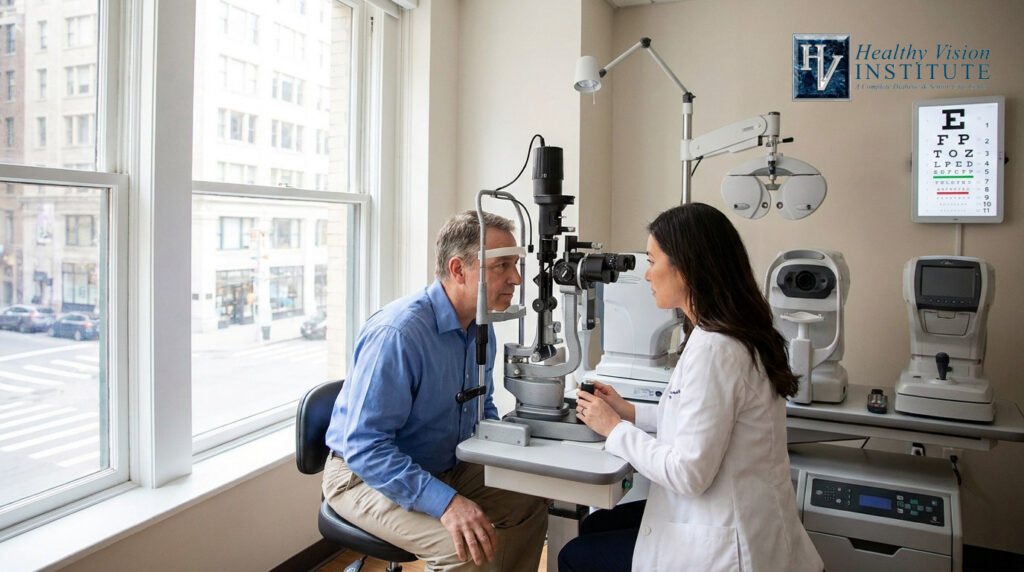
After dilating your pupils, your eye doctor examines the macula for the telltale blister of fluid. The key test is OCT, a scan that takes detailed cross-section images of the retina and clearly shows fluid collecting underneath, along with how much and exactly where. In some cases, an imaging test that follows dye through the retinal blood vessels is used to pinpoint the leak and guide treatment. These images also help distinguish this condition from wet macular degeneration, which needs very different treatment.
This is the whole reason not to self-diagnose. The symptoms can mimic other conditions, and only imaging can confirm that fluid, not abnormal vessels or something else, is the culprit.
Treatment and the Watch-and-Wait Approach
Here is the honest and mostly good news: in the majority of cases, central serous retinopathy clears on its own. The fluid gradually reabsorbs over a few months and central vision returns, often completely. For that reason, the first step is frequently careful observation rather than any procedure.
Watchful waiting
Because most episodes resolve without intervention, your eye doctor may recommend monitoring with repeat imaging while you reduce stress and address any steroid use. Jumping to treatment too early is usually unnecessary and can carry its own small risks.
When treatment is needed
If the fluid does not clear after several months, if it keeps coming back, or if your vision is significantly affected, treatment options come into play. These may include a gentle laser treatment aimed at the leaking spot, a light-based therapy that targets the overactive support layer, or other approaches your retina specialist considers appropriate for your case. The goal is to seal the leak and let the retina settle back into place.
Addressing the triggers
No matter the path, reducing stress and, with your doctors, safely minimizing steroid exposure are part of the plan, because they treat the root of the problem and help prevent it from returning.
Self-Care and Reducing Recurrences
You have more influence over this condition than with many eye problems, largely through the stress and steroid connections.
- Manage stress. Prioritize sleep, build in recovery time, and use whatever genuinely helps you unwind, whether that is exercise, time outdoors, or relaxation practices.
- Review your medications. Tell your eye doctor about all steroids you use, and ask your prescribing doctors whether any can be reduced.
- Protect your sleep. Address snoring or poor sleep, which are linked to this condition.
- Monitor your vision. Check each eye separately now and then so you notice a recurrence early.
- Keep your follow-up visits so your doctor can confirm the fluid is clearing and your vision is recovering.
When to See an Eye Doctor
Any new blurring, distortion, or a dim spot in your central vision deserves an eye exam, even though central serous retinopathy itself is usually not dangerous. The reason is simple: these same symptoms can come from more serious conditions, and only an exam with imaging can tell them apart and make sure your eye gets the right care.
If you have had central serous retinopathy before and notice familiar symptoms returning, or if a known episode is not improving after a couple of months, check back in. Lingering or recurring fluid is exactly the situation where treatment can make a difference.
Frequently Asked Questions
Will my vision come back?
In most cases, yes. The fluid under the retina usually reabsorbs on its own over a few months, and central vision often returns fully. Some people are left with subtle changes, which is more likely with repeated or long-lasting episodes, so monitoring and treating stubborn cases matters.
Is central serous retinopathy caused by stress?
Stress is one of the strongest associations with this condition, likely because stress hormones are related to steroids, which can make the retina leak. Many people notice an episode during a particularly demanding or sleepless stretch. Managing stress is a genuine part of treatment and prevention.
Do I need to stop my steroid medication?
Possibly, but never on your own. Steroids in any form can trigger or worsen this condition, so tell your eye doctor about all of them. Your doctors will decide together whether any can be safely reduced or stopped, balancing your eye against whatever the steroid is treating.
Is this the same as macular degeneration?
No. Central serous retinopathy is caused by fluid leaking under the retina, while wet macular degeneration involves abnormal blood vessels. They can cause similar central blurring, which is exactly why retinal imaging is needed to tell them apart, since they are treated very differently.
Can it come back?
Yes, recurrences are common, especially if stress or steroid use continues. That is why addressing those triggers and checking your vision periodically are important. If symptoms return, an exam can confirm whether fluid is back and whether treatment is needed this time.
How long does it take to clear up?
Most episodes resolve within a few months. Your eye doctor will usually monitor with imaging during that time. If the fluid has not cleared after several months or keeps recurring, that is when treatment options are considered to help seal the leak.
Should I just wait it out?
Watchful waiting is often the right first step because most cases clear on their own, but that decision should follow a proper diagnosis, not a guess. See your eye doctor first to confirm it is central serous retinopathy and not something more serious, then follow their plan for monitoring or treatment.
A blurry, dim center in one eye is unsettling, but with central serous retinopathy the outlook is usually bright, especially once you have the right diagnosis and a plan. At Healthy Vision Institute, our retina specialists use detailed imaging to confirm this condition, rule out more serious causes, and guide you on whether to watch or treat, across our offices in St. Petersburg, Clearwater, and New Port Richey. Do not guess about a change in your central vision. Call us today at 727-738-5900 to schedule your exam and get clear answers.