
You wake up, look in the mirror, and notice your lower eyelid isn’t sitting where it used to. It droops away from the eye, and you can see that pink, glossy strip of inner lid that’s normally hidden. Your eye waters all day, yet it also feels dry and gritty. If this sounds familiar, you may be dealing with ectropion.
Ectropion is when the lower eyelid rolls or sags outward, away from the surface of the eye. It sounds like a small cosmetic quirk, but it’s more than that. The eyelid has a real job: it spreads tears, sweeps away dust, and shields the delicate front of the eye every time you blink. When the lid turns out, that whole system stops working the way it should. The result is a cycle of watering, redness, and irritation that tends to get worse, not better, if you leave it alone.
The good news is that ectropion is well understood and very treatable. Most people who fix it wonder why they waited so long to feel comfortable again. This guide walks you through what causes the eyelid to turn out, the warning signs worth watching, and the real options for getting relief.
Key Takeaways
- Ectropion is a lower eyelid that turns outward, breaking the eye’s natural tear and protection system.
- The most common cause is simply aging, as the tissues and muscles that hold the lid tight loosen over time.
- Classic signs include constant watering, a gritty or burning feeling, redness, and crusting in the morning.
- Left untreated, it can lead to chronic irritation, eye infections, and even corneal damage.
- Mild cases can be soothed with drops and ointments, but a lasting fix usually means a short outpatient surgery.
- If your eye waters nonstop or you can see the inner lid drooping, it’s time to have an eye doctor take a look.
In This Guide
- What ectropion actually is
- What causes the eyelid to turn outward
- Who is most at risk
- Symptoms and warning signs
- How eye doctors diagnose it
- Treatment options, from drops to surgery
- Everyday self-care and prevention
- When to see an eye doctor
- Frequently asked questions
What Ectropion Actually Is
Think of your lower eyelid like a snug curtain rod holding a curtain tight against a window. The muscles and tendons at the inner and outer corners keep that curtain pulled taut so it rests right against the eyeball. When those supports stretch or weaken, the curtain sags. The lid falls away from the eye and folds outward.
That gap between the lid and the eye is the root of the whole problem. Tears are supposed to drain through a tiny opening on the inner corner of the lower lid called the punctum. When the lid turns out, that little drain no longer touches the eye, so tears pool and spill over your cheek instead of draining properly. At the same time, the exposed inner surface of the lid and the front of the eye dry out because blinking can’t spread the tear film evenly. Watery and dry at once. It’s a frustrating combination, and it’s exactly what ectropion does.
Ectropion almost always affects the lower lid, and it can happen in one eye or both. It ranges from subtle, where only the inner corner pulls away, to obvious, where a good stretch of the lid hangs loose.
What Causes the Eyelid to Turn Outward
Ectropion isn’t one single disease. It’s a shape problem with several possible roots.
Aging and Loose Tissue
By far the most common cause is age. Over the years, the tendons and muscle at the corners of the eyelid naturally relax and lose their spring, much like the elastic in an old waistband. Gravity does the rest, and the lid drifts down and out. This is why ectropion shows up far more often in people over 60.
Facial Nerve Weakness
The muscle that closes your eyelid is powered by the facial nerve. If that nerve is weakened, say from a stroke, a bout of Bell’s palsy, or a facial injury, the muscle can’t keep the lid firm against the eye. The lid then sags outward. In these cases you might notice weakness on one whole side of the face, not just the eyelid.
Scarring and Skin Tightness
Anything that pulls the skin of the lower lid downward can drag it outward. Burns, past eyelid surgery, skin cancer removal, sun damage over decades, or even severe eczema can create scar tissue that tugs the lid away from the eye. Doctors call this the cicatricial type.
Growths and Other Causes
A lump, cyst, or tumor on the eyelid can weigh the lid down and turn it out. Rarely, some people are simply born with lids that don’t sit tightly, often linked to certain genetic conditions.
Who Is Most at Risk
A few things raise your odds of developing ectropion:
- Age. The single biggest factor. Tissues loosen with the decades.
- A history of facial paralysis. Bell’s palsy or stroke can leave lasting eyelid weakness.
- Prior eyelid or facial surgery. Especially cosmetic lower-lid procedures that removed a bit too much skin.
- Sun-damaged or scarred skin. Years of Florida sun add up, and our patients across Tampa Bay know this one well.
- Skin cancer near the eye, or its treatment, which can scar the lid.
- Previous burns or trauma to the face.
Symptoms and Warning Signs
Ectropion tends to announce itself through discomfort more than appearance. Watch for:
- Watery eyes that never quite stop. Tears run down the cheek because they can’t drain properly. This is often the first and most annoying sign.
- A gritty, sandy, or burning feeling, as if something is stuck in your eye that you can’t blink away.
- Redness along the inner rim of the lid and across the white of the eye.
- Dryness, oddly enough, alongside all that watering, because the tear film isn’t spreading evenly.
- Crusting and mattering in the morning as the eye tries to protect itself.
- A visible droop, where you can see the pink inner surface of the lower lid pulling away from the eye.
- Light sensitivity and blurry vision that clears when you blink.
If the exposed part of the eye stays irritated long enough, the clear front window of the eye, the cornea, can develop scratches or infections. That’s the point where things move from uncomfortable to genuinely risky for your vision.
How Eye Doctors Diagnose It
Diagnosing ectropion is usually quick and painless. Your eye doctor can often spot it just by looking at your face and eyelids. But a proper exam goes deeper to find the cause and to check that the eye itself hasn’t been harmed.
Expect the doctor to gently pull the lower lid down and let go, watching how fast it snaps back against the eye. A lid that’s slow to return points to loose, stretched tissue. They’ll press lightly at the corners to test how tight the tendons are, and check the muscle strength if a nerve problem is suspected.
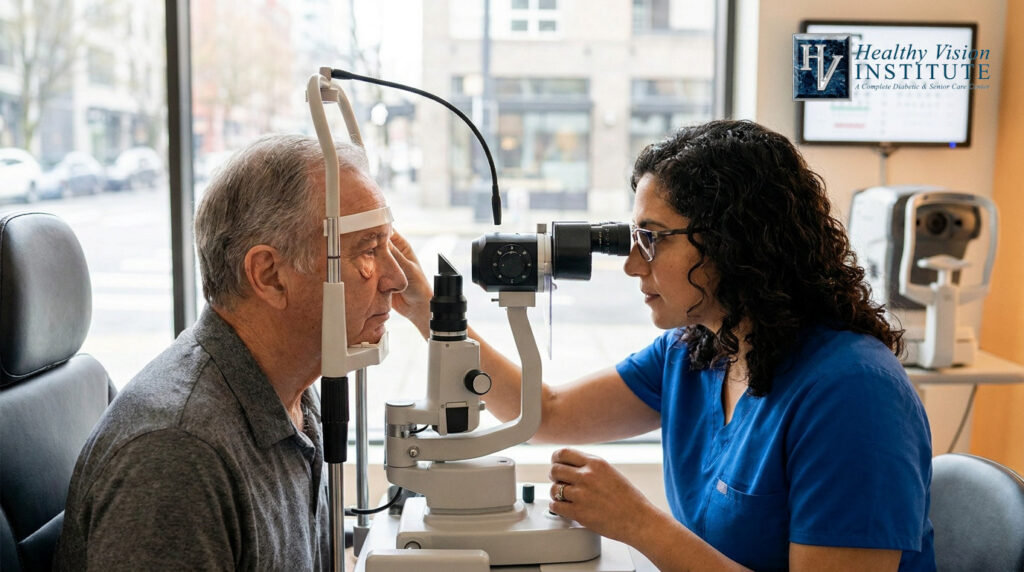
They’ll also examine the surface of your eye with a microscope called a slit lamp, using a harmless dye that glows under blue light. This lights up any dry patches or scratches on the cornea so the doctor knows how much the exposed eye has suffered. If scarring or a growth seems to be the cause, they’ll inspect the skin closely and may recommend removing and testing any suspicious lump.
Treatment Options
How ectropion is treated depends on how far it’s gone and what caused it. The goal is always the same: get the lid resting snug against the eye again so tears drain and the surface stays protected.
Soothing Mild Cases
If your ectropion is early or minor, or if you’re waiting for surgery, your doctor may start with comfort measures. Artificial tears during the day and a thicker lubricating ointment at night keep the eye moist and shielded. Some people benefit from taping the lid gently at night or using a moisture chamber while they sleep. These steps don’t fix the lid position, but they calm the irritation and protect the cornea in the meantime.
Surgery for a Lasting Fix
For most people, the real solution is a short outpatient surgery to tighten and reposition the lid. It’s a common, well-established procedure done under local anesthesia, meaning you’re awake but the area is numb, and you go home the same day.
The exact technique depends on the cause. When loose tissue is to blame, the surgeon tightens the tendon at the outer corner and removes a small amount of stretched lid, restoring the snug fit. When scarring is pulling the lid down, the surgeon may add a skin graft or release the scar to let the lid rise back into place. If a nerve problem is the cause, the approach is tailored to support the weakened lid.
Recovery is usually straightforward. Expect some bruising and swelling for a week or two, and stitches that either dissolve or come out at a follow-up visit. Most people are pleasantly surprised by how much better their eye feels once the lid sits where it belongs again.
Everyday Self-Care and Prevention
You can’t always prevent ectropion, since aging is the main driver. But you can protect your eyes and slow some of the contributing damage:
- Wear sunglasses with UV protection whenever you’re outside. In our sunny corner of Florida, this matters more than most people realize.
- Don’t rub or tug at your eyes. Pulling down on the lower lid, even out of habit, stresses tissues that are already loosening.
- Wipe tears gently, dabbing upward and inward rather than dragging the lid down.
- Keep the eye lubricated with artificial tears if you’re prone to dryness.
- Treat skin conditions around the eyes, and see a doctor promptly about any growth or sore near the lid that doesn’t heal.
When to See an Eye Doctor
Don’t wait out constant watering, redness, or a lid that clearly droops away from your eye. Ectropion rarely improves on its own, and the longer the eye surface stays exposed, the higher the chance of infection or corneal damage.
Seek care sooner rather than later if you notice your vision blurring, sharp pain, a lot of redness, or a feeling that something is scratching your eye with every blink. These can be signs the cornea is getting irritated, and that deserves prompt attention.
Frequently Asked Questions
Is ectropion dangerous, or just annoying?
It starts as annoying but can become dangerous. The exposed eye surface can dry out, get infected, or develop scratches on the cornea. Catching it early keeps it in the annoying category and out of the vision-threatening one.
Will ectropion go away on its own?
Usually not. Because the underlying cause is loose or scarred tissue, the lid won’t tighten back up by itself. Drops can ease symptoms, but a lasting fix generally needs a minor surgery.
Does the surgery hurt?
The procedure is done with numbing medicine, so you shouldn’t feel pain during it. Afterward, expect mild soreness, swelling, and bruising for a week or two, which most people manage easily with over-the-counter relief.
Why do my eyes water so much if the problem is a loose lid?
It seems backward, but it makes sense. When the lid turns out, the tiny tear drain no longer touches the eye. Tears have nowhere to go, so they overflow onto your cheek instead of draining away.
Can younger people get ectropion?
Yes, though it’s less common. In younger people it usually traces back to a facial nerve problem, a burn or injury, scarring, or a condition present from birth, rather than plain aging.
Is ectropion the same as a droopy eyelid?
No. A droopy upper eyelid that sags over the eye is called ptosis. Ectropion is specifically the lower lid turning outward, away from the eye. They’re different problems with different fixes.
How long does recovery from ectropion surgery take?
Most of the visible bruising and swelling settles within one to two weeks. The eye typically feels dramatically more comfortable soon after, and full healing continues over the following weeks.
Can I do anything to avoid needing surgery?
Lubricating drops and ointments, sun protection, and not rubbing your eyes can ease symptoms and protect the surface. But if the lid is clearly turned out, surgery is usually what restores normal function.
Take the Next Step Toward Comfortable Eyes
If your lower eyelid is sagging outward and your eyes water, burn, or feel gritty day after day, you don’t have to just live with it. Ectropion is common, and it’s fixable. The team at Healthy Vision Institute can examine your eyelids, check the health of your eye’s surface, and walk you through the options that make sense for you, whether that’s simple soothing care or a straightforward corrective procedure.
Call Healthy Vision Institute today at 727-738-5900 to schedule an eye exam at our New Port Richey, Clearwater, or St. Petersburg office. Your comfort and your vision are worth it.