
The short answer
Pink eye (conjunctivitis, kon-junk-tih-VY-tis) is redness and swelling of the thin, clear layer that covers the white of your eye and lines your eyelids. It comes in three main types. Viral and bacterial pink eye are very contagious. Allergic pink eye is not. Most cases are mild and clear up in days to a couple of weeks. But a red eye with pain, blurry vision or strong light sensitivity is not ordinary pink eye. Get it checked right away.
You wake up, and one eye is red and goopy, maybe crusted shut. The first questions are always the same: Is this contagious? How long will it last? Do I need drops?
It depends on what kind of pink eye you have. Pink eye isn’t one illness. It’s a name for an irritated, swollen layer on the surface of the eye, and it has a few different causes. One kind spreads easily. One spreads too. One doesn’t spread at all. This guide explains how to tell them apart, how long each one lasts, what helps, and when a red eye is a sign of something more serious, which matters more as we get older.
Key Takeaways
- Pink eye is swelling of the conjunctiva, the clear layer over the white of your eye.
- The three main types are viral, bacterial and allergic.
- Viral pink eye is the most common. It’s very contagious and usually clears in 7 to 14 days, sometimes longer.
- Bacterial pink eye often has thick yellow or green discharge. It usually clears in 2 to 5 days, and antibiotics may help.
- Allergic pink eye itches, usually affects both eyes, and is not contagious.
- Antibiotics don’t help viral pink eye.
- Eye pain, blurry vision, strong light sensitivity or intense redness mean see an eye doctor right away.
What Is Pink Eye?
Picture a thin sheet of clear plastic wrap stretched over the white of your eye and folded back to line the inside of your eyelids. That’s the conjunctiva (kon-junk-TY-vuh). It’s full of tiny blood vessels you normally can’t see.
When something irritates or infects it, those little vessels swell, and the white of your eye turns pink or red. That’s where the name comes from. The swollen layer also makes extra tears and mucus, so you get watering, discharge and a gritty feeling.
Viral vs. Bacterial vs. Allergic Pink Eye
The type matters, because it changes how long it lasts, whether you can spread it, and what helps. Here’s how they usually compare:
| Viral | Bacterial | Allergic | |
|---|---|---|---|
| Discharge | Watery | Thick, sticky, yellow or green | Watery or stringy |
| Itching | Some | Some | A lot |
| Eyes | Often starts in one, may spread to the other | One or both | Usually both |
| Often comes with | A cold or sore throat | Crusted lids in the morning | Sneezing or a runny nose |
| Contagious? | Yes, very | Yes, very | No |
| How long | Usually 7 to 14 days | Usually 2 to 5 days | As long as you’re around the trigger |
| What helps | Time and comfort care | Sometimes antibiotic drops | Allergy eye drops, avoiding the trigger |
Pink eye can also come from things like smoke, pool chlorine, a chemical splash or something stuck in the eye, like a loose eyelash. For a chemical splash, rinse your eye with clean water right away and call for care.
Viral pink eye
This is the most common kind. It’s often caused by the same kind of virus that causes the common cold, and it spreads easily. The discharge is usually watery. Like a cold, it has to run its course.
Bacterial pink eye
This kind tends to make thick, sticky discharge that can glue your eyelids shut overnight. It’s contagious too. Mild cases often clear on their own, and your doctor may prescribe antibiotic drops or ointment for others.
Allergic pink eye
This isn’t an infection, so you can’t give it to anyone. It’s your body reacting to pollen, pet dander, dust or mold. The big sign is itching, usually in both eyes. In Florida, where something is almost always blooming, it can show up any time of year.
Pink Eye Symptoms
- Pink or red color in the white of the eye
- Swollen eyelids
- Watery, teary eyes
- A gritty feeling, like something is in your eye, or an urge to rub it
- Itching, irritation or burning
- Discharge (pus or mucus), and crusting on the lashes, especially in the morning
See an eye doctor right away if you have:
Eye pain · Sensitivity to light · Blurry vision that doesn’t clear when you wipe away discharge · Intense redness · Symptoms that get worse or don’t improve · Bacterial pink eye that doesn’t improve after 24 hours of antibiotics · A weakened immune system. Call Healthy Vision Institute at 727-738-5900.
Red Eye After 65? It May Not Be Pink Eye
Most red eyes are harmless. But as we get older, a red eye is more likely to have a more serious cause hiding behind it. These can look like pink eye at first:
- Uveitis is swelling inside the eye. It brings a deep ache, light sensitivity and blurry vision, with little or no discharge.
- Acute angle-closure glaucoma is a sudden rise in eye pressure. Signs include a painful red eye, blurry vision, halos around lights, headache and sometimes nausea. It’s an emergency.
- A corneal infection is an infection on the clear front window of the eye. It’s more likely if you wear contact lenses, and it can move fast.
You can’t tell these apart from pink eye on your own. If a red eye comes with pain, blurry vision or light sensitivity, get it checked the same day. After hours, go to the emergency room.
How Long Does Pink Eye Last?
- Viral: usually 7 to 14 days without treatment. Sometimes it takes 2 to 3 weeks or more.
- Bacterial: usually 2 to 5 days without treatment, but it can take up to 2 weeks to go away completely. Antibiotics may shorten it.
- Allergic: it comes and goes with your exposure to the trigger.
Is Pink Eye Contagious?
Viral and bacterial pink eye are very contagious. They spread through touch: rubbing your eye, then touching a doorknob, a towel or someone’s hand. Allergic pink eye is not contagious.
While you have symptoms, it’s best to stay home from close-contact work or activities, and to keep grandkids’ hands and yours washed. Ask your doctor when it’s OK to go back.
Pink Eye Treatment, by Type
Viral
Antibiotics won’t help viral pink eye. Comfort care helps while your body clears it: cool compresses, artificial tears, and gently wiping away discharge with a clean cloth.
Bacterial
Your doctor may prescribe antibiotic drops or ointment. They can shorten the infection and help keep it from spreading. A warm, damp washcloth helps loosen morning crusting.
Allergic
Avoiding the trigger helps most. Allergy eye drops, cool compresses and artificial tears can ease the itch.
Wear contact lenses?
Stop wearing them until your eye doctor says it’s OK to start again. Throw away the lenses and case you used while your eye was infected. A red, painful eye in a contact lens wearer needs a same-day check.
How to Keep Pink Eye From Spreading
- Wash your hands often, especially after touching your eyes or face.
- Try not to touch or rub your eyes.
- Don’t share towels, washcloths, pillows, eye drops or eye makeup.
- Change pillowcases and towels often while you have symptoms.
- Throw away eye makeup you used while infected.
For allergic pink eye, keep windows closed on high-pollen days, and rinse off after time outdoors.
Who Gets Pink Eye?
Anyone can. It’s more likely if you spend time with young children (hello, grandkids), have a cold, have allergies, or wear contact lenses. Newborns with pink eye should be seen by a doctor right away.
How It’s Diagnosed
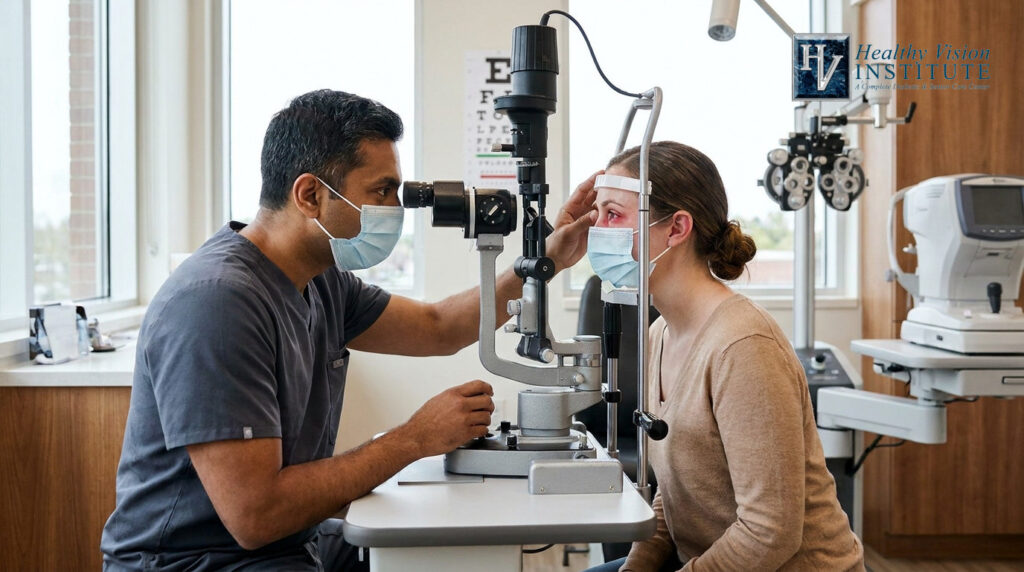
An eye doctor can usually tell what kind of pink eye you have from your symptoms and a close look with a special microscope and bright light. That exam also checks that nothing more serious is going on deeper in the eye. In stubborn cases, the doctor may test the discharge.
Why See Dr. Powers
Dr. James Powers, D.O., is a comprehensive ophthalmologist with fellowship training in vitreoretinal surgery. He can check the whole eye, front to back, to find out whether a red eye is simple pink eye or something that needs more care. We see patients in St. Petersburg, Clearwater and New Port Richey.
Frequently Asked Questions
How do I know if my pink eye is viral, bacterial or allergic?
Watery discharge with a cold points to viral. Thick yellow or green discharge that crusts your lids points to bacterial. Strong itching in both eyes, often with sneezing, points to allergic. An eye doctor can tell you for sure.
Is pink eye contagious?
Viral and bacterial pink eye are very contagious. Allergic pink eye isn’t contagious at all.
How long does pink eye last?
Viral pink eye usually lasts 7 to 14 days, sometimes longer. Bacterial pink eye usually clears in 2 to 5 days, but can take up to 2 weeks. Allergic pink eye comes and goes with the trigger.
Do I need antibiotics for pink eye?
Only for some bacterial cases. Antibiotics don’t help viral or allergic pink eye. That’s why knowing the type matters.
Can I go to work or see my grandkids with pink eye?
If it’s viral or bacterial, you can spread it while you have symptoms. Stay home from close contact, wash your hands often, and ask your doctor when it’s OK to go back. Allergic pink eye isn’t contagious.
Can pink eye hurt my vision?
Ordinary pink eye usually doesn’t. But pain, blurry vision or strong light sensitivity can mean something more serious, so get checked right away.
Why is pink eye worse in the morning?
Discharge dries on your lashes while you sleep. A warm, damp washcloth laid over your eye for a few minutes helps loosen it.
Not Sure What’s Behind Your Red Eye?
A red, watery eye is miserable, and guessing at the cause can mean treating it the wrong way. If it’s not clearing up, or it comes with pain or blurry vision, let us take a look.
Book with Healthy Vision today. We see patients at our New Port Richey, Clearwater and St. Petersburg offices.
Ready to book your appointment?
- New Port Richey: 5413 US Highway 19, New Port Richey, FL 34652
- Clearwater: 2565 Enterprise Rd, Clearwater, FL 33763
- St. Petersburg: 603 7th St S, St. Petersburg, FL 33701
More guides: Dry eye · Glaucoma · Eye floaters
Healthy Vision. Healthy Life.
Sources: Centers for Disease Control and Prevention, “About Pink Eye” and “How to Treat Pink Eye” (cdc.gov, 2024); American Academy of Ophthalmology, “Conjunctivitis: What Is Pink Eye?” and “What Is Glaucoma?” (aao.org).
This article is general information, not medical advice for your eyes. For advice about your own eyes, call us or see your eye doctor.